
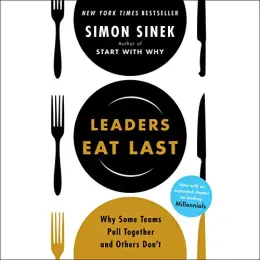
How to be a good leader?
"Leaders Eat Last" is a book written by Simon Sinek that explores the concept of leadership and how effective leaders can create a positive and productive work environment. The main argument of the book is centered around the idea that great leaders prioritize the well-being of their team members, putting the needs of others before their own.
Servant Leadership:
Sinek advocates for a style of leadership where leaders prioritize serving their team members rather than seeking personal gain. Leaders are encouraged to take care of the needs of their team, ensuring they have the resources and support to thrive.
Circle of Safety:
The concept of the "Circle of Safety" is central to the book. It refers to a trusting and collaborative work environment where individuals feel safe, valued, and supported. When people feel secure within their team, they are more willing to take risks and contribute innovative ideas without fear of negative consequences. This environment fosters creativity and a culture of continuous improvement.
Chemical Basis of Trust:
Sinek delves into the neurochemical aspects of trust and argues that experiencing trust and positive interactions in in general releases oxytocin, the “love hormone”. Oxytocin reduces stress and selfishness and improves collaboration. In order to create a positive and productive work environment, the leader should create a Circle of Safety to increase oxytocin.
Commentary
- Sinek's ideas, particularly those related to the biological basis of trust and the Circle of Safety, have been criticised for not being grounded in rigorous scientific evidence. It has been argued that the neurobiological aspects are oversimplified, and more research is needed to support the claims.
- Some critics suggest that Sinek's approach oversimplifies complex leadership concepts. They argue that leadership is multifaceted, and a focus on empathy and trust alone might not be sufficient in all situations.
- The book focuses on neurochemical responses to a servant leadership. The framework could be developed further by combining insights from neuroscience with other leadership theories to understand of how leadership styles impact the brain and, consequently, organizational outcomes.
Legacy
Leaders Eat Last develops an argument for servant leadership by grounding it in neurochemistry. It also popularised the concept of “Circle of Safety” as a foundation for productivity, innovation and employee wellbeing. The book has influenced leaders across various industries, encouraging them to adopt a more people-centric approach to leadership by creating a positive work environment, focusing on employee well-being, and emphasizing ethical leadership.
Order the book
Explore the book in depth and put the theory into practice.
First book free on Audible with no commitment.
Many companies have an annual personal development budget that can be spent on books!