
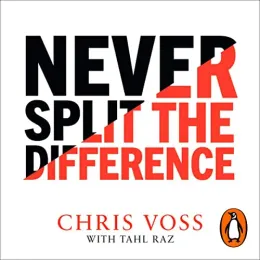
How to succeed at negotiations?
"Never Split the Difference" is a negotiation and communication guide written by former FBI hostage negotiator Chris Voss. Voss challenges conventional negotiation wisdom and introduces a set of tactical and empathetic approaches to deal-making in situations such as salary negotiations, performance management, sales and conflict resolution.
Tactical Empathy
Voss recommends applying empathy tactically, which means understanding and acknowledging the emotions of the other person without necessarily agreeing with their position. It is a tool used to understand the counterparty’s goals and limits in the negotiation and to establish rapport.
Don’t make assumptions about the counterparty, instead guide the conversation to get them to give you information. Ask open ended questions, mirror back what they said to you. Recognise and respect their feelings, even if you don’t agree with their position.
Illusion of Control
Individuals may resist directives or suggestions that feel imposed on them. When both parties feel they have a say in the decision-making process, it encourages a sense of partnership and increases the likelihood of reaching mutually beneficial agreements.
- Clearly define the boundaries or parameters within which the negotiation is taking place. When both parties understand the limits, it provides a sense of structure and control.
- Give the other party the opportunity to make choices within predetermined parameters.
- Guide your negotiating partner towards firmly saying “no” to something to give them a sense of control. It also commits them to a position that you can then reference to further down the line.
- When presenting options, frame them in a positive light. Use language that emphasizes the benefits or advantages of the choices available.
- Employ calibrated questions to guide the conversation. Questions that start with "what" or "how" can lead the other party to consider specific options or courses of action.
- Strategic use of silence can be a powerful tool. Allow pauses after making proposals or asking questions to prompt the other party to respond.
Commentary
- Never Split The Difference argues that negotiation is mainly an emotional process and that empathy and the _feeling _of control are key to success. Feelings are arguably less important in more detached settings such as negotiating over email or through intermediaries. While Voss suggests making all negotiations personal to increase chances of success, the alternative could be to instead adopt a more objective and rational approach instead.
- There are ethical considerations raised by critics, particularly regarding the use of certain techniques that may be perceived as manipulative. Some argue that negotiators should prioritize ethical conduct and integrity over tactics that might be seen as exploiting psychological vulnerabilities.
- While Voss argues for the strategic use of "No" to gather information, some critics contend that the emphasis on getting the other party to say "No" might be oversimplified. In certain situations, constantly pushing for a negative response might not be conducive to building positive rapport.
Legacy
Although the author's experience has developed through intense and complex negotiations with criminals, "Never Split the Difference" has become the go-to manual for negotiation in any situation.
Order the book
Explore the book in depth and put the theory into practice.
First book free on Audible with no commitment.
Many companies have an annual personal development budget that can be spent on books!